This review covered the previous semester's work with green oak, the site and context, program, research, living building challenge, sustainable strategies, materials, details, and landscape. Having a team of 12 students and a knowledgeable, passionate professor has allowed us to get so much work done. The design is nearly finished and the construction drawings constructions specifications will be finished by our next review on the 20th of April.
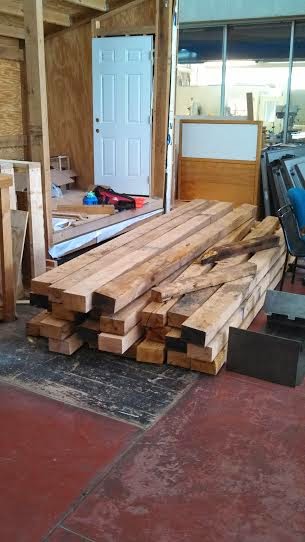
The Green Oak Initiative is a proposal by the University of Tennessee to develop contemporary green (un-dried) oak construction techniques for the US building market. This initiative will allow currently underutilized heart-centers of logs to be used as an extremely low energy, carbon friendly, beautiful, and high value wood product - as structural members in sustainable buildings.
Showing posts with label green architecture. Show all posts
4.04.2015
Penultimate Review
On Wednesday, April 1st we had our penultimate review. Bill Martella, James Rose, and Matt Culver were our reviewers and gave us a great critique and great advice that we have already started to implement into our design.
This review covered the previous semester's work with green oak, the site and context, program, research, living building challenge, sustainable strategies, materials, details, and landscape. Having a team of 12 students and a knowledgeable, passionate professor has allowed us to get so much work done. The design is nearly finished and the construction drawings constructions specifications will be finished by our next review on the 20th of April.
Labels:
architecture,
CoAD,
critique,
design,
green architecture,
living building challenge,
review,
UT Architecture,
UTK,
utk architecture
3.25.2015
Exterior Mockup
We have one more building mockup completed! This time we’re looking at how the green oak
cants can be used as siding on a building.
With this 1:1 scale mockup, we’re investigating the weathering capabilities
of 5/8” thick boards and the fasteners that are used to attach them. This mockup will use stainless steel screws
as well as typical woods screws to get a better idea how the acid in the oak
will corrode the different metals. We
will evaluate the structure periodically to look at how ‘fissures’ or cracks
may occur along the fastener point where the boards are pinned.
A roughly 4”x6” cant can be milled into 6 boards. We
purchased ours cants from United Forrest Products in Morristown, Tennessee,
they also milled them down for us. The
great folks were a big help in cutting a small order like ours (48
boards), I think they’re used to cutting quantities like 4,800!
The initial idea for this mockup was a 4x4x8’ box that would
be clad in oak boards, using a pattern called reverse board and batten. The box allows us to simulate the proper air
space behind the boards that we would expect in the final project. The air space is critical as this allows moisture
to leave the boards easier after a rain.
We re-purposed two floor panels that were used in the
original green oak exhibit; those 2”x6”s frames are beefy!
No, Oliver isn't parkouring, he’s fastening in a lot of
extra cross bracing. We decided to build
most of the structure inside the Art + Architecture building for the ease of
construction and access to the woodshop. It’s too bad that not all construction sites have air conditioning!
No this isn’t a port-a-john! It is the pre-oak-sided box
frame being lowered with the help of a UT motorpool truck and its tremendously
helpful lift gate. Just the frame alone
probably weighs a little more than three hundred pounds, didn’t I say those 2”x6”’s
were beefy! No problem with five architecture students eager to get their hands
dirty!
You can see the house wrap that covers the box. This is because we wanted to be true to the
wall design and prevent water from escaping into the plywood covered frame. Those 2”x3”s and 2”x4’s you see are called
furring strips, in our case, we over sided them to allow us hang the very heavy
oak siding without concern.
Hey it’s looking good!
We've got the boards spaced appropriately and Oliver is putting his finishing
touches on the roof. Why a roof? Well, want to keep the inside dry.
And it’s done!! Yes, it may look like an over glorified outhouse but we have bigger plans. We
expect to monitor this mockup over the next three months. We’re happy to get it up this time in the year
where it’ll be experiencing a wide range of temperature changes and precipitation.
-Paul Attea
Labels:
architecture,
CoAD,
construction,
design,
green architecture,
green oak,
Knoxville,
sustainability,
UT Architecture,
UTK,
utk architecture
3.06.2015
Back To The Hardwood Mill!
I recently took a trip to pick up a batch of freshly cut oak cants for our next building mock-up. Because cants aren't available in a typical home improvement store, I had to go right to the source: the sawmill. I took our big UT Motor pool truck down to Seymour, TN and paid the East Tennessee Wood Products Company, Inc. a visit.
The visit had been delayed for about two weeks because of the ice and snow, and by the looks of the lumber yard I’m glad we waited. (I’ll make send my apologies to the UT Motopool employees who had to clean up all the mud in the truck, I’m Sorry!)
Ronald, Mark, and Randy Dixon, the sawmill’s owners and operators, were a great help in humoring us with such a small order. Randy, who was driving that ridiculously huge machine, helped to flawlessly maneuver the 16’ cants on our 10’ bed. The wood weighed the truck bed down so much that I didn’t think I’d be able to make it out of the yard!
This research can have a profound impact on these small, owner operated sawmills, who make up the majority of sawmills in the US hardwood industry. Creating value added solutions for these low grade byproducts means that these ‘mom and pop’ sawmills could draw in more revenue with no change to their typical operations.
Hopefully these 25 cants should hold us over for a while, now we have some building to do!
-Paul Attea
Labels:
architecture,
CoAD,
green architecture,
green building,
green oak,
heavy timber,
structure,
sustainability,
sustainable,
UT Architecture,
UTK,
utk architecture
2.08.2015
Phase II
A new phase for the Green Oak Initiative. A new semester. A new team. Since winning the U.S. EPA Sustainable Design Challenge, we have $90,000 in grant funding for a real-world application. After Phase I's success we can now continue to design and build a full scale building in Phase II.
The primary objectives in Phase II will be:
- To develop, detail, and construct a full-scale building using green oak pallet cants as structural members.
- To monitor, record, and analyze the demonstration project for structural, acoustic, and thermal performance over a two-year period as the green oak members dry. (Due to the length of time necessary for drying, only the first part of this monitoring will be supported by the P3 Phase II grant.)
- To disseminate our findings widely through multiple digital media platforms, peer reviewed publications, design award programs, and programs recognizing the integration of pedagogy and practice such as the NCARB (National Council of Architectural Registration Boards) Award and the ACSA (Association of Collegiate Schools of Architecture) Creative Achievement Award.
This semester will be for designing and creating drawings and specifications for the building. General task for the semester include:
- Meetings with community partner to identify any shortcomings in the proposed design
- Detailed climatic and site analysis
- Detailed code review
- Target setting for Living Building Challenge (LBC) or LEED Platinum rating as appropriate for selected project
- Preliminary energy modeling to “tune” envelope and solar apertures
- Daylighting studies
- Development of envelope sealing and insulating details
- Explore potential for sustainable site strategies such as graywater treatment or rainwater harvesting
- Explore sustainable strategies for interiors such as reducing the use of coatings with VOCs and low energy lighting
- Development of an outline specification for the envelope, site, and interiors.
- Refine the drawing set for the demonstration project
- Provide drawings and specifications to the county code officials in support of the issuance of a building permit
The building will be a cabin at Red Bird Mission's Campus in Beverly, Kentucky. People travel to the campus to assist Red Bird and the local community usually though construction and maintenance projects. During their stay they sleep in cabins on the campus. A new cabin will provide more beds, meaning more capacity for volunteers. The volunteers spend most of their time away working, but when they are on campus they clean up, eat, sleep, and hang out together. We intend for the cabin to provide spaces for washing up, sleeping, and community.
Labels:
architecture,
CoAD,
EPA,
green architecture,
green building,
Knoxville,
Red Bird,
sustainability,
UT Architecture,
UTK,
utk architecture
5.06.2014
Proposed Designs
Our team studied different variations for a proposed house design. We integrated these projects into our Phase 2 proposal. Here are the three drawing sets that we brought to Washington DC:
Team A
Team B
Team C
Team A
Team B
Team C
5.01.2014
Closer Look at our Final Board
If you did not get a chance to view our final presentation up close, here is another look at it. You may also download it here: Green Oak Presentation
3.12.2014
Gathering it all together
Subscribe to:
Posts (Atom)